Time Is Your Biggest Advantage
Compound interest means a dollar saved at 15 grows to far more than the same dollar saved at 40. Being young is not a disadvantage with money. It's a superpower. Every year you wait is a year of that superpower wasted.
A Teen's Guide to Financial Freedom
"Financial freedom isn't about being rich. It's about being free to make your own choices."
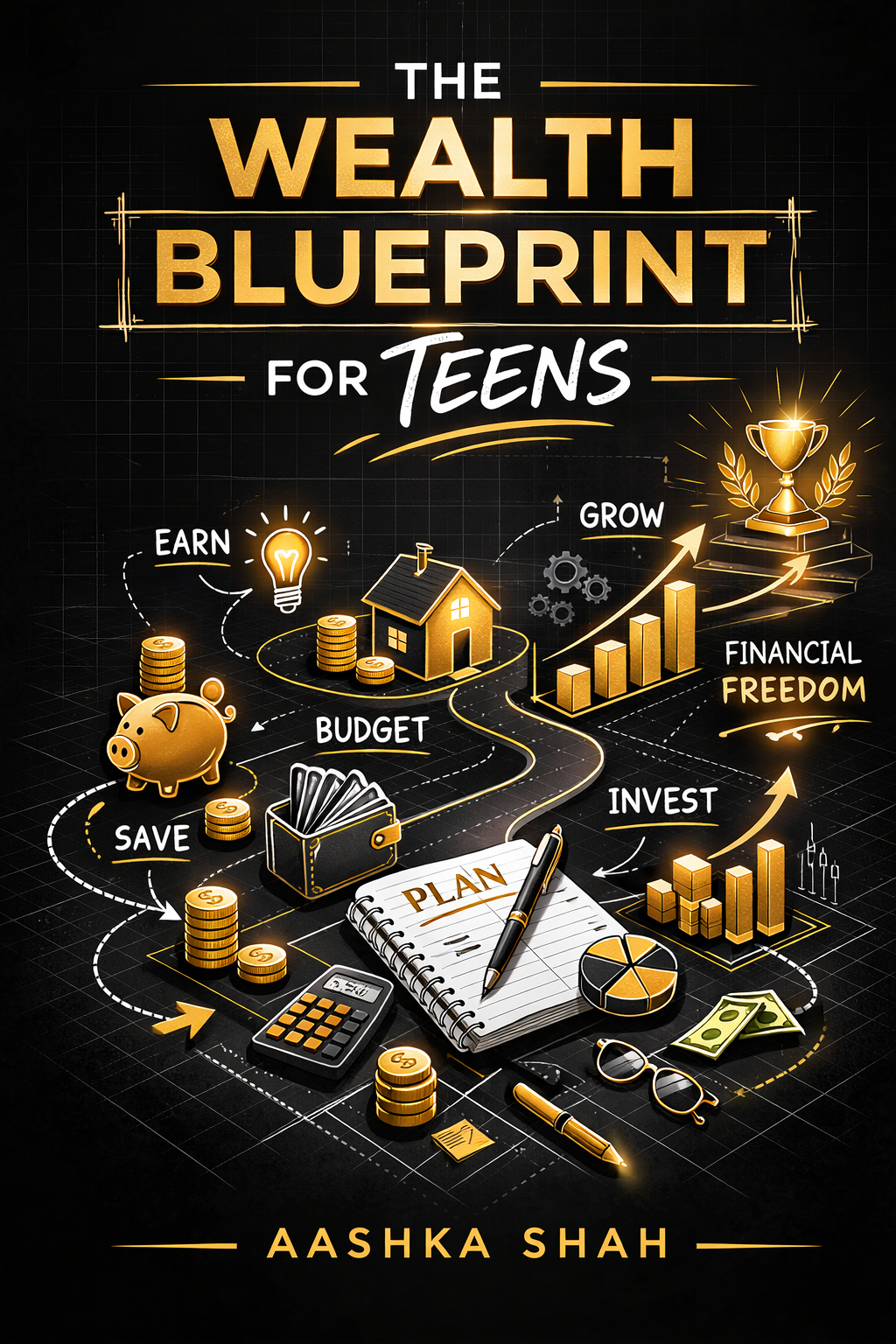
After her first summer job, Aashka logged into her bank account ready to buy the laptop she'd worked all season for. The screen showed $4.12.
No car. No expensive trip. The money had disappeared in what she now calls ghost money: a snack here, a subscription there, little purchases that never felt like real spending but quietly drained everything.
Eight dollars here, twelve there, five just for a drink. A new laptop gone, piece by piece, through endless eating and impulse buys.
That moment taught her one hard truth: "Silence around spending leads to empty pockets."
She went looking for answers and found everything was written for adults: mortgages, 401(k)s, and jargon that spoke to no one whose income is a summer job and birthday money. So she wrote the book she wished had existed.
left in her account after a full summer of work, expecting enough for a laptop
Schools teach calculus. They skip APY, credit scores, and what a W-2 is, even though one of those shows up every month for the rest of your life. This book fills the gap.
Compound interest means a dollar saved at 15 grows to far more than the same dollar saved at 40. Being young is not a disadvantage with money. It's a superpower. Every year you wait is a year of that superpower wasted.
Most teens graduate knowing calculus but not what APY means, how credit scores work, or why their first paycheck looks smaller than expected. These things show up every month forever, and this book explains them.
Every chapter ends with a real task: audit where your money went last month, cancel one ghost subscription, open a savings account. By the final chapter, you've accidentally built a complete personal finance plan.
Those $8 snacks, forgotten streaming subscriptions, and "just this once" impulse buys add up to hundreds, sometimes thousands, every year. This book shows you how to find your ghost money before it vanishes.
Budgets explained as a bathtub. Investing as planting a seed. "Choose Your Fighter" budget styles. The Marshmallow Test. Finance has never been this readable, or this relevant to the way teens actually think.
After the $4.12 moment, Aashka went looking for answers and found only books written for adults. So she wrote the one for her generation, using the voice, examples, and energy that actually makes sense to teens.

The first Action Challenge in the book takes fifteen minutes, costs nothing, and changes how you see every dollar from that point on. You're standing at the foot of the mountain at the best possible time to start climbing.
Get it on Amazon →